People are completely overwhelmed.
In their personal lives. In their professional lives.
From the simple basics of everyday life (which toothpaste to buy) through to the news they consume, the advertising they are blasted with, the ‘advice’ they are subjected to on social, the streaming services they watch, the inboxes they avoid, people are struggling to… think, let alone make decisions.
And then they arrive at their work desk, where the next onslaught begins.
Into this norm of daily navigation the response from most software platforms is the exact opposite of what people need. Instead of simplifying their tools, they instead increase the velocity of shipping features. More is better apparently.
The platforms and processes followed in most white collar roles have been constantly complexifying, the accepted wisdom that more equals better when it comes to ‘value’.
The Golden Years
Think back to 2010 (if you can). It was just after the GFC, and SaaS platforms were starting to take off, bringing functionality to the masses (small businesses, solo players) not just the larger companies.
This is the era of cheap Google AdWords clicks, the early days of Facebook, Gmail and Hotmail becoming mainstream[1]. WordPress was a massive unlock for everyday people wanting to create a simple website[2]. Good times.
We’ll look back at these as the golden years of SaaS. Affordable, usable, simple.
The next few years were wonderful, increasing functionality, whilst still intuitive and user friendly.
But then the journey of overwhelm starts to creep in.
I’ll outline the journey using HubSpot as an example of the typical company SaaS platform, but you can switch most of this out with your particular SaaS tool [3], and the touchpoints also apply to small business platforms [4].
The Overwhelm journey
Here’s the overwhelm journey, simplified to a number of key stages:
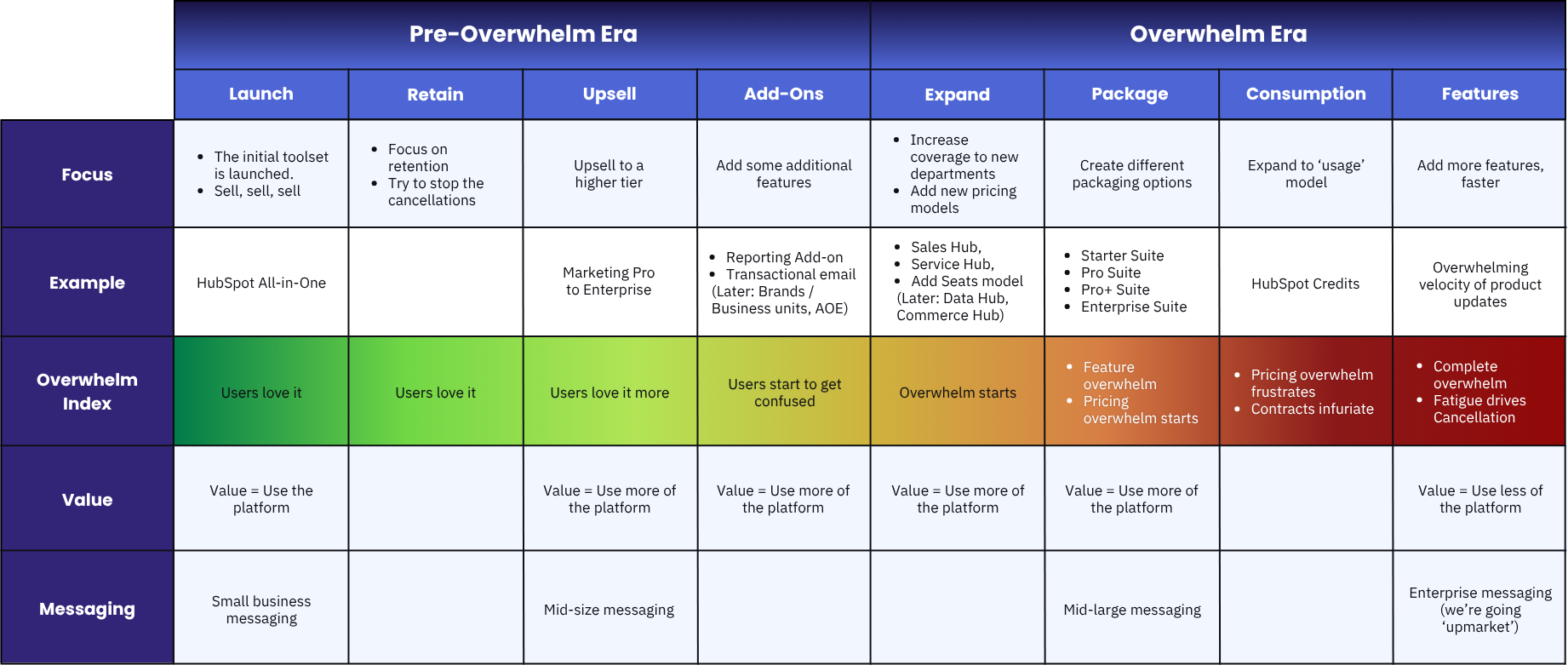
(Full size image here)
The Pre-Overwhelm Era
Launch
Remember the excitement of new platforms launching that solved actual problems?
A very clearly defined solution to a real problem. Straight to the point.
That was HubSpot 15 years ago. Solving a very clear problem: providing an all-in-one marketing tool with landing pages, forms, emails, reporting and the big innovation: the timeline. The ability to easily see exactly where, when and how a person was interacting with you.
Retention (Customer Experience)
Easy to start. But also easy to cancel. Retention of customers became the next focus.
Customers could see their problem was being solved, but they weren’t sticking around - it was so easy to switch to another tool.
Often the key to stopping churn wasn’t about the product, it was about the ecosystem (a company wide focus on the customer experience, the rise of ‘customer success’ teams, and ensuring a consistent experience across the product).
This is also when Partner programs started to make an impact.
Upsell
After retaining customers, now the focus shifted to upselling the customers to higher tiers of the product. Think Pro and Enterprise product SKUs.
It was about providing advanced features.
Add-Ons
And then the add-ons started to arrive. For HubSpot this started with the ads add-on, reporting add-on, and transactional email. This wasn’t a single point in time, it extended over the full journey, for example Business Units (now called Brands) arrived later, and the recently launched AEO tool has a single domain limit that can be extended as an add-on.
At this point, users were still pretty happy. They understood the tool, they could articulate the benefits, and they could understand the pricing.
Not for long…
The Start of the Overwhelm Era
Expand
The big unlock for SaaS comes when an initial foothold in a company can expand into other departments.
Enter Sales Hub. Not only a big go-to-market change (‘we’re now a CRM company’), but the start of a new direction with Hubs, and the introduction of the Seats pricing model.
For the first time, users are both excited (a complimentary tool set has arrived) and confused (being forced to buy 10 seats in order to unlock Enterprise features). The start of pricing overwhelm has begun.
The messaging around ‘value’ is very clearly about using more.
Later, Service Hub arrives, and the value potential is increased further.
Packaging
Combining Hubs into packages (Suites) is the next obvious step. Users can buy a Pro Suite to unlock discounts.
At this point however, pricing has become overwhelming. New and existing customers are confused. Legacy subscription pricing is honoured, further adding to the confusion.
The Overwhelm Era has arrived.
The Overwhelm Era
The additional Hubs, the legacy per seat pricing, the revised per seat pricing, the add-ons… companies are overwhelmed now.
On top of this, feature mapping is fluid. Features that were launched in Enterprise (playbooks) are enabled for Pro users. Operations Hub is renamed to Data Hub. Features in Marketing Hub are pulled out and pushed into Content Hub. Sales Hub features (quotes) are ‘relaunched’ into Commerce Hub.
Consumption
AI has hit, so on top of all the usual feature releases, the holy grail of SaaS is dangling in front of everyone: usage based pricing.
Just when it seems as though it can’t be more overwhelming, Credits are launched. And with it a messaging push around AI that foists feature slop onto an already weary user base.
The sting in the tail: it’s not actually usage based, because the credit tiers can’t be reduced. If a user bumps their credit tier over the limit one month they are fixed in place. It isn’t consumption (or usage) based at all. A shareholder’s dream. A trick that had been implanted right from the start with marketing contact tiers.
Feature Velocity
The final nail in the coffin of clarity arrives: product updates that leave everyone (except breathless LinkedIn posters) completely overwhelmed. The end is near. Fueled by AI driven development efficiencies the product updates arrive thick and fast, with users for the main part hoping to completely ignore them.

But ignoring updates isn’t the long term answer, since the updates include user interface changes. Nevermind the functionality changes, the way it looks is also changing. You can’t escape it.
Choking on garnish
Product managers are in a difficult position, especially for foundational tools in a product. Let’s assume you are the product manager for the main CRM object views. You are tasked with making it ‘better’, whatever that means….
You can consult feature requests, analyse usage telemetry, interview users across various levels of experience, incorporate integration plans with the rest of the platform, etc. But whatever you develop, it will by definition require changes to how it currently operates for a user.
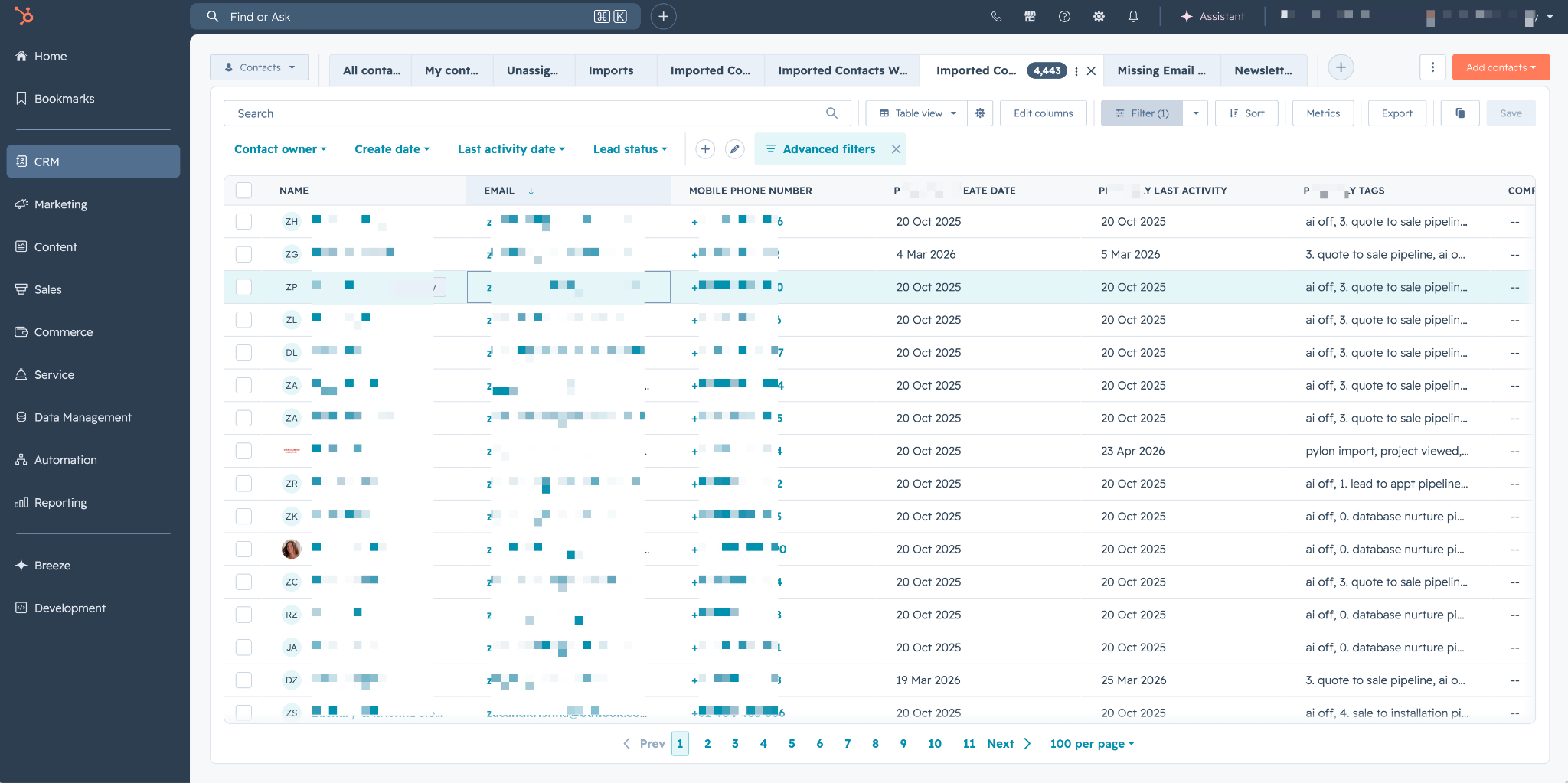
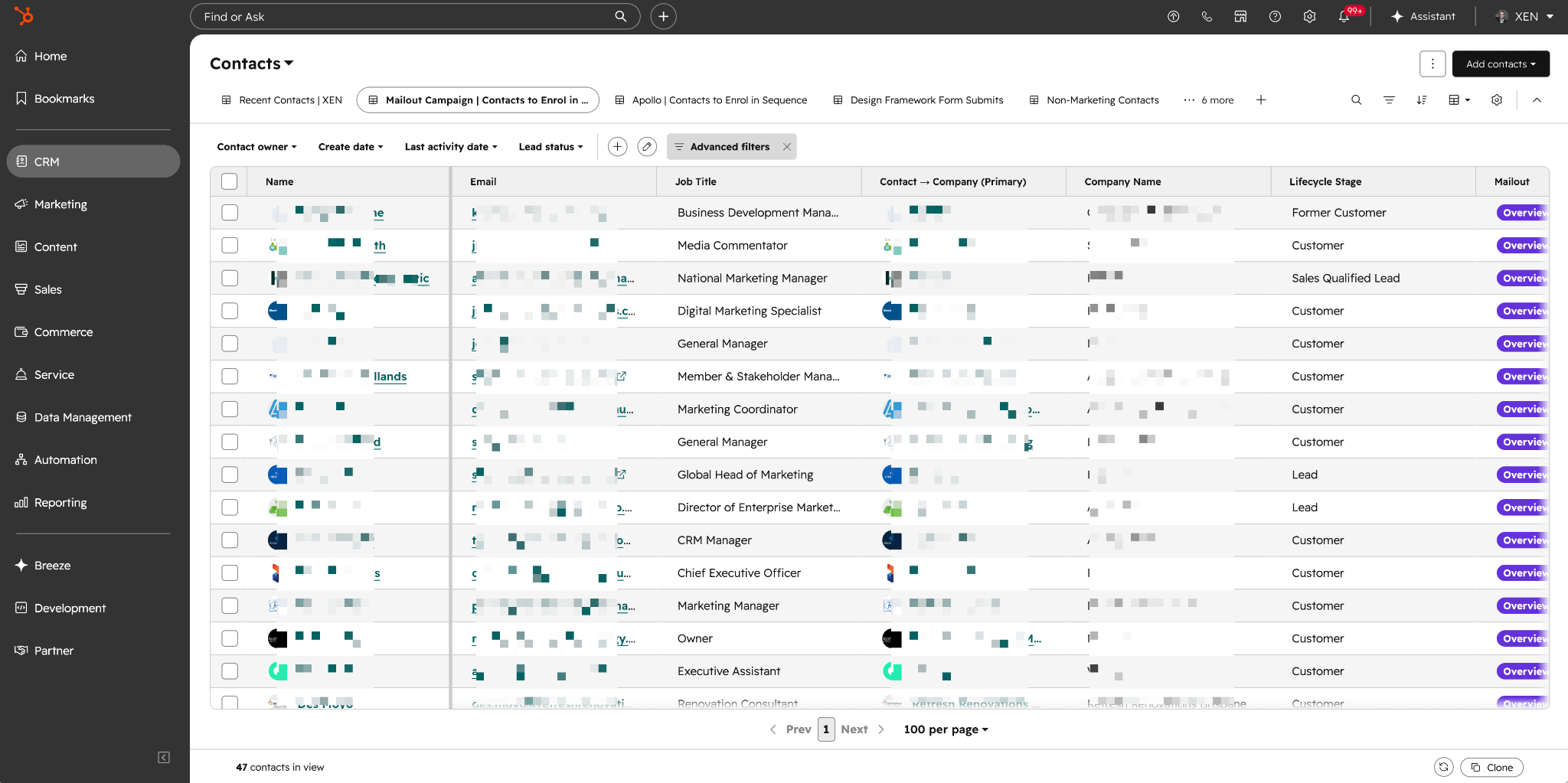
Which is why both of the following screenshots are the same tool. The first is the default, current experience for users, the later one is the next version (currently a beta as I write this). Same object, same basic goal for the user, wildly different experience.
Get ready for this:
The devil is in the details.
Where did Search go? Where’s the count? How do I clone? How do I save? How do I export? Where did Metrics go? How do I rename?
Now tell a user, who is already overwhelmed, that this is a good thing. Then multiply it across tools in a platform, and then across different platforms. It’s no mystery why users are burning out.
For the product managers, intimately familiar with their specific scope, and the power users in the tools every day, this is fine. We’ll manage, we’ll happily[12] spend the few minutes it takes to reacquaint. For everyone else, this is too much.
As if that isn’t enervating enough, a walkthrough set of dialogs or a feedback survey pops up right when a user is trying to do their work. Make it stop.
SaaS Platform Response
Now imagine you are in charge of overall SaaS platform direction. What’s the playbook for you now? How do you respond?
Your competitors are pushing more functionality into their platforms. Surely you need to do the same. To stay ahead. Saas and AI is a landgrab that waits for no one, or so the board tells you. More is more. Your messaging is key.
Tell the customers how much value they are getting, with more emails (as if inboxes aren’t overwhelmed enough). Tell them it is about outcomes. Tell them the future lies in the hands of the early adopters. Scare them about the ‘changing landscape’.
Tell your confused partners that you are focusing on ‘enterprise’ and ‘up market’ because hey, conventional enterprise wisdom excuses complex as ‘powerful’. If your product is easy to use, do you even lift bro?
When the in-market messaging doesn’t turn the tide, turn to your partners with egregious gamification (win a trip yo!) to coerce the tools on trusting customers.
Spam at Scale
And then the ultimate irony, provide tools to your customers so they can overwhelm theirs.
Consider the focus of a tool like Prospecting Agent, to ramp up your outreach efforts with AI assisted messaging. Personalised spam at scale. Of all the things that your customers and prospects need, getting more auto generated spam is not the flex you think it is.
How to respond when that doesn’t work? How about interrupting them with AI voice calls. Brilliant! Can’t wait for that to be included, it’s sure to be on a product manager’s Kanban board now.
Please make it stop.
What if we just stopped the updates?
Imagine if there was a switch that locked the platform as it is today. No changes, no updates (except important bug and security fixes).
Would you be tempted to turn it on?
A few years ago I’d have been worried (FOMO) about missing out on new features. Today I’d welcome the peace. Most of our clients would too.
Example: Turn off AI
Most of the AI rammed into tools is useless feature slop. There’s definitely some good parts, but for the most part it is noise.
Aside: we use Teamwork at XEN to manage all our customer delivery.
About a year or two ago they started adding AI features. The usual slop. I hated it. But what they did, that I loved, was provide an option to turn it all off. Here’s how they provided the control:
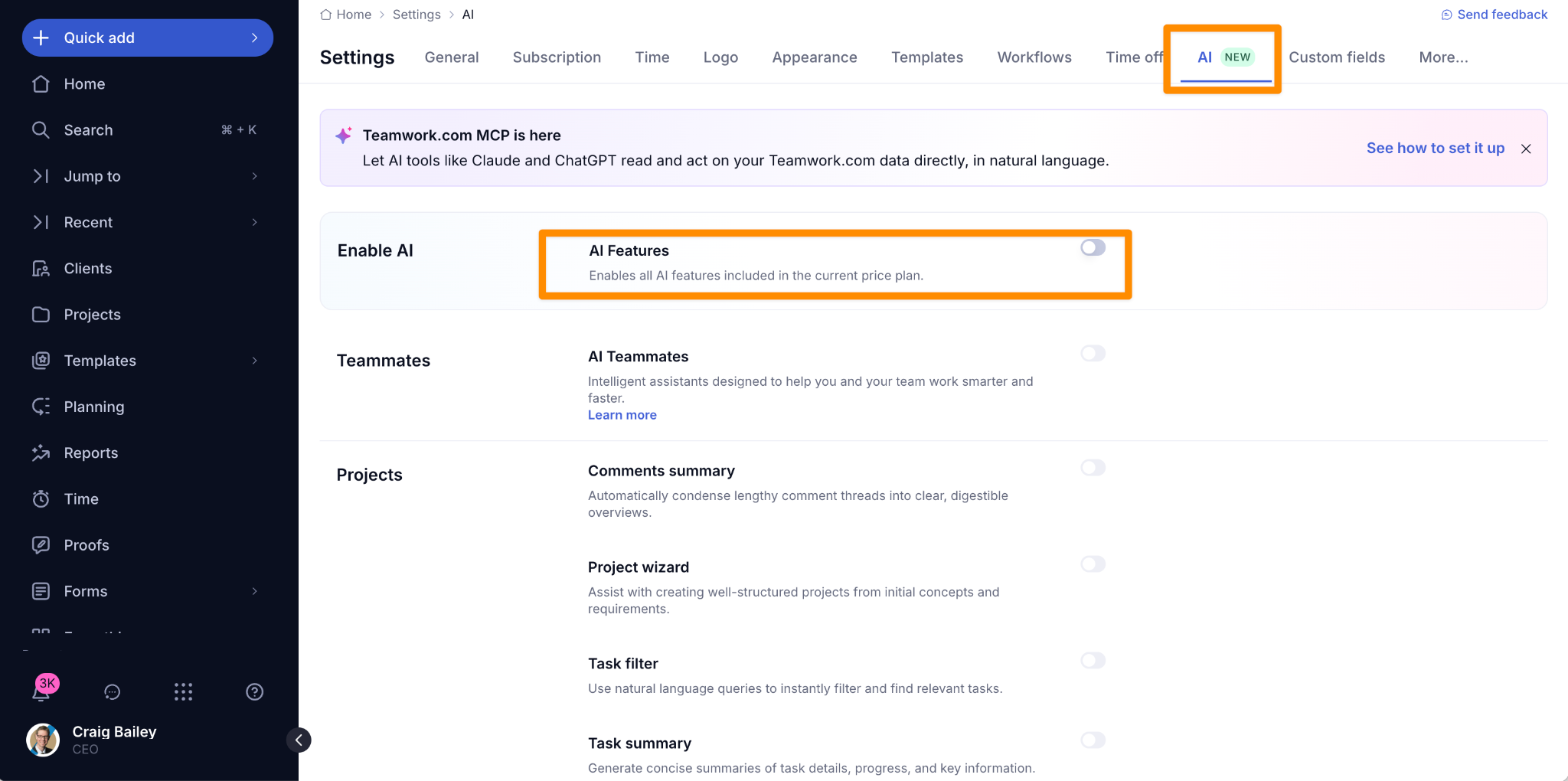
Also: One of the other things I love about Teamwork is how consistent it has remained. Although the interface does change from time to time, it is very manageable. Plus we just pay monthly (there are annual discounts, but they aren’t compelling enough for us, given how our team requirements change). More on this (contracts) later.
Summary:
Consistent interface
Ability to turn off feature slop
Flexible contracts/payment
This is what we want in a platform. The platform that manages millions of dollars worth of client delivery for us.
Customer Response
So how are users coping with all this?
Here’s where it gets interesting. In the sections below I’ll comment from the perspective of the mid-large B2B space where we typically work. It will be different in the surrounding areas (ie small/startup and enterprise, and B2C, where we don’t play much).
Essentially there are two main responses: Consolidate or Cancel
The first can be good for platforms such as HubSpot, the second not so much.
Consolidate
If users are going to be overwhelmed by platforms, then perhaps there is relief in reducing the number of platforms they use. Consolidating the tech stack.
This is where HubSpot can benefit.
Their expansion focus has given them access to other departments, allowing them to roll other team processes into the foundation that is HubSpot.
The two main areas we’re seeing this with HubSpot:
Service Hub (often with Customer Agent as a key tool to deploy)
Content Hub (for hosting websites)
Service Hub is a good replacement for other tools (ZenDesk, JIRA, etc) and whilst it can be overwhelming, at least it is a consistent user experience across the platform. A reduction in mental switching costs. And perhaps the key AI tool in the platform (Customer Agent) that we actively promote (it’s really good)[5].
Content Hub is a good replacement for other CMS, especially WordPress. Again, consistency is the benefit. Why have a different user experience between your email editor and your web page editor? Consistency is a time saver. An overwhelm saver. At XEN we’ve built out a whole separate brand just for this use case.
(Aside: WordPress is a micro example of the whole overwhelm journey. A decade ago a non-technical person could manage their own site in WordPress. These days they give up in despair[6].)
But, just as it is easy to consolidate into HubSpot, it’s also easy to consolidate out to other platforms as well. So this can be a threat for HubSpot as well.
Which brings us to…
Cancel
This is the logical response.
What do we all naturally do when we are overwhelmed?
We do nothing. We put off making decisions, We avoid the mental cycles. We check out mentally. We cancel.
We’re seeing this playing out in portal usage with customers. They are looking for simpler options. They are starting to move back to focussed tools for singular problem solutions.
They are either:
seriously considering throwing out the big platforms that their businesses are built on, in favour of simple, understandable tools, OR
reducing their subscriptions
We’ll see a flood of this when it comes to implementations and subscription renewals over the coming 12-24 months[7].
The so-called SaaSpocalypse has been framed around vibe coding replacements and agentic cost saving. But I wonder how much of it will be simply due to overwhelm. Companies don’t necessarily want to replace, they just want less.
Think about your own personal experiences.
The relief of canceling a product, even if it will cause some issues. I’ll take the future inconvenience, in order to avoid the decision pain now, we say.
It starts with minor things in our personal lives like cancelling streaming subscriptions. The age of minimisation is upon us. An eagerness to live simpler lives. The willingness to cut back for the peace of mind, even if there’s some sacrifice along the way.
This extends naturally to our professional subscriptions.
And the corporate bonus: avoiding the risk of being the one who got it wrong. No one wants to be the decision maker on a contract that might not fit where the business is going to be in six months time.
Contract Remorse
Which brings us to the overwhelm of rigid contracts.
Contracts are going to have to change. Customers aren’t lured by 2 and 3 year contracts anywhere near how they were previously[8].
The disruption happening in most mid-large companies today means that the structure and focus of teams is going to be surprisingly different in the coming quarters. Fewer CFOs are going to be signing off on inflexible contracts. If a SaaS provider can’t provide a contract that accommodates, they should expect the cancellation rates to increase.
Aside: Never underestimate contract remorse. Take a look at HubSpot Google Reviews and you’ll see that the main gripe is contracts and overzealous sales reps. Expect this to get worse as SaaS providers push their reps harder with unreasonable quotas.
So how to respond?
Use HubSpot Less
I’m seriously considering making this our new go-to-market tagline.
No longer urging users to implement more, turn on more, integrate more, impose more.
But instead, a very specific focus on a minimal set of tools and features, curated for each individual person and team. And avoiding everything else. With regular reviews, pruning further as much as possible.
We’re seeing this already.
A prime example: the HubSpot area we’ve seen companies cutting back:
Marketing Hub Enterprise
Why? Because hardly anyone in marketing needs the Enterprise tools.
Anecdata: Consider this: Five of our clients have reduced their marketing teams (usually the marketing manager, but sometimes the entire marketing team) in the last 6 months. It’s a small sample size, but it feels like there’s a growing trend here.
Attribution Loss
What about all that marketing attribution knowledge and functionality being lost?
Reality check: In the last year hardly anyone has asked us about getting better attribution in their business.
The main reason: they are moving to sales only conversions, cutting out the marketing assistance.
I’ve never seen a single portal implement advanced journey analytics in an impactful way (usually the underlying data isn’t close to consistent or reliable enough). Attribution reporting in general is almost doomed to fail unless the whole company embraces the discipline of logging and tracking everything.
When these pillars are changing, the value of Marketing Hub Enterprise drops significantly.
Last year we worked with a client to understand what they should focus on in their upcoming renewal. They had Marketing Hub Enterprise. But they’d downsized their entire marketing team earlier in the year. Here they were with a huge cost for a Hub no one was using. Removing it was an obvious step. This isn’t an isolated case.
Where to from here?
Let’s review the journey:
People are overwhelmed in their personal lives
This extends to their professional lives
Overwhelmed with the number of platforms
Overwhelmed with the complexity of the platforms
They are frustrated with inflexible contracts
Their response is to:
Reduce platforms
Reduce/cancel subscriptions
Platforms need to help reduce the overwhelm
Platforms need to provide flexibility with contracts
In an ideal world
Let’s take a quick trip to fantasy land and consider what an ideal approach might look like.
Yes, I know this isn’t realistic (revenue would plummet overnight), it would never be possible. But here’s what I’d like to see:
[1] Seat
A single seat. Call it a ‘HubSpot Seat’. That unlocks everything.
No Sales seats, Service seats, Marketing seats, etc. No Starter versus Pro versus Enterprise seat. And definitely no Core seat[8].
Get rid of all of those different seats, and replace them with a single seat.
Pricing overwhelm solved.
[2] Permissions
Permissions are how access is controlled.
A user has a HubSpot seat, that gives them license to absolutely everything.
But permissions control the access[9]. (Permission Sets make providing default setups easy)
[3] Hide everything I don’t have access to
Next, put a simple toggle in the menu (or profile dropdown) that is effectively ‘Hide everything I don’t have permission to use’.
It hides menu options (no more annoying upsell hints), interface options (eg hides Export buttons if the user doesn’t have permission), hides update options, hides settings, etc.
The user interface is now streamlined down to just the stuff that matters to them.
But they can, if they wish, toggle the option to see everything again, albeit greyed out (based on permissions).
Feature overwhelm soothed.
[4] Consumption model fairness
Move to an honest consumption model that charges for actual usage. Credit and Marketing Contact tiers that reset each month based on usage. No more Credit tiers and Marketing Contact tiers that can’t be reduced. Only pay for what you use.
Controversial potential: Extend consumption to other areas where it makes sense (start with anything that currently has defined limits eg number of segments, workflows, reports, API calls, pipelines, integration points, published web pages, ad accounts, social accounts, etc). This is probably a bit extreme, and needs careful thought, but you get the idea.
This is where most of the revenue would come from.
No need for add-ons, they just become consumption items now, consuming credits when they are used.
Guardrails in place of course to limit unexpected and accidental credit overuse.
[5] Flexible contracts
Make cancelling easy. No lock-ins. Simple month-to-month is the norm.
Growing Companies
As a company grows, it adds more HubSpot Seats, and consumes more Credits. That’s it.
If it restructures, it simply cancels seats and reduces consumption.
If they want to reduce their monthly cost? No need to cancel a contract, instead simply clear out or turn off all the stuff they don’t use anymore (archive reports, segments, remove ad accounts, disable integrations, stop sending marketing emails, pause sequences, etc).
This means any company, no matter how small, has access to all the features, and they simply pay more as they grow in size and consumption.
Get Real
I realise the above isn’t realistic, it’s far too late for a platform the size of HubSpot to reset like this. Or is it? Sometimes companies disrupt themselves, before someone else does.
Finally
As we finish, let’s at least agree on this: Providing ‘more’ isn’t the solution for users. (Or stock prices for that matter [10]).
The competitive advantage for platforms to embrace (and consultants, and trainers) is guiding users on what not to do.
How to be extremely focused.
How to do less.
How to escape the noise and impact of constant updates.
How to avoid the overwhelm.
How to be minimalists in their corporate roles.
That’s It
That’s the end of the article. A bit abrupt I know, but I’ve said my piece. I feel better now.
Usually this would be the part where a call to action would be slipped in, an offer to help you in your business with how to streamline and consolidate your platform usage. But as a thank you for reading this far, I’ll refrain. You are overwhelmed enough.
Footnotes
[1] Hotmail was actually launched in 1996, and Gmail in 2004, but it’s not until the 2010s that they became mainstream.
[2] WordPress had launched in 2004, but it was only taking off around 2010 when it pushed over hosting more than 10% of sites globally.
[3] Switch in your corporate tool eg Salesforce, ServiceNow, Atlassian, Workday, Zoho, Adobe etc
[4] Simple platforms such as WordPress, Notion, SEMrush, Xero, Intercom, even Canva etc. Have you tried to use Canva lately? The initial promise of simplifying design, now a cruel contradiction.
[5] Note: you don’t need Service Hub in order to use Customer Agent (any Pro seat will do). But we often see them rolled out together.
[5] If HubSpot sales are increasing, surely that contradicts the cancellation prediction? To consider: new sales in a large market, is a separate trend to cancellations in an existing customer base.
[6] My wife is a perfect example of this. She’s an artist, a writer. Not technical. Yet she managed her own website for years using WordPress. Perhaps five years ago she gave up, it was all too overwhelming. If you are interested, she uses Payhip now.
[7] Reminder: I’m talking about our focus: mid-large B2B. Enterprise will be different.
[8] Ever want to feel better about yourself? Simply ask someone at HubSpot what a Core seat is - half the time they don’t even know.
[9] Permissions (and security) is the only area that justifies complexity IMO. Granularity of control is necessary, even if it can be overwhelming at first. This is a specialised area however, it’s not something most users will ever see.
[10] I’ve resisted alluding to HubSpot’s stock price. I’m not saying there is a correlation between overwhelm and declining stock price. But I am saying that feature velocity hasn’t improved the situation. More isn’t the answer. Not for users, not for shareholders.
[11] This piece isn’t about AI (or being anti-AI). AI feature slop just happens to be a hallmark of the overwhelm era. There are some really amazing AI features in platforms, but they’ve been lost in a deluge of half-baked releases. The expectation is low, the association more often than not, one of disillusionment.
[12] On a personal note, I love the new CRM Index view they’ve rolled out. So using this as an example isn’t about whether the update is good (it is), it’s about whether the additional overwhelm is good for people. For most, it’s not.